

How Toner Cartridges Create Images: An Analysis Of Principles And Structure
Jul 17, 2026
In the imaging process of a laser printer, the toner cartridge plays a central role in converting digital signals into visible text and images. The workflow of a laser printer typically includes seven steps: charging, exposure, development, transfer, fusing, cleaning, and discharge, five of which revolve around the photoreceptor drum. It is precisely through this series of precise processes that the toner cartridge completes the full transformation from an electrostatic latent image to a permanent print. Understanding how the toner cartridge works not only helps elucidate the essence of laser printing but also enables users to select and maintain printing supplies more effectively.

Principles and Structure
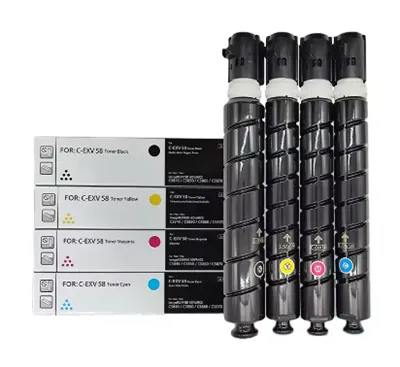
Formation of the Electrostatic Latent Image: Charging and Exposure
The laser printing process begins with the photoreceptor drum. The surface of the photoreceptor drum is coated with a layer of organic photoconductive material, which acts as an insulator in the absence of light. The charging roller first applies a uniform electrostatic charge to the surface of the photoreceptor drum, ensuring the entire drum surface carries a consistent electric potential. Next, a laser beam selectively scans and illuminates the surface of the photoreceptor drum according to the print data-areas exposed to the laser experience a decrease in electrical resistance, causing the charge to dissipate; unexposed areas retain their original charge. Through this process, an electrostatic latent image-invisible to the naked eye and composed of the distribution of electrical charges-is formed on the surface of the photoreceptor drum. The level of detail in this latent image directly determines the resolution and grayscale range of the final print output.

Toner Adsorption and Transfer: Development and Transfer
Once the electrostatic latent image is formed, the toner cartridge begins to perform its core function. The toner inside the cartridge is a fine powder mixture consisting primarily of plastic particles, carbon black, and colorants. When the development roller conveys the toner to the vicinity of the photoreceptor drum, the toner particles carry a charge opposite in polarity to that on the drum's surface. Due to this difference in charge polarity, the toner is electrostatically attracted to the areas of the photoreceptor drum carrying the latent image charge, transforming the originally invisible latent image into a visible toner image. Next, the transfer roller applies an opposite charge to the paper, transferring the toner image from the surface of the photoreceptor drum to the paper. At this point, the image has been transferred from the photoreceptor drum to the surface of the paper, but the toner is only temporarily adhered and has not yet bonded firmly to the paper fibers.

Permanent Fixation of the Image: Fusing
After transfer is complete, the paper enters the fusing unit. Through the combined action of the heating roller and the pressure roller-the heating roller typically reaches a temperature of 180 to 200 degrees Celsius-the fusing unit melts the resin components in the toner and presses them into the paper fibers. Toner is primarily composed of a scientifically formulated blend of thermosensitive resin, carbon black, charge control agents, and other components. Under the combined effect of high temperature and pressure, the melted toner penetrates the microscopic pores of the paper fibers, forming a permanently bonded image upon cooling. At the same time, a cleaning blade removes toner residue from the surface of the photoreceptor drum, and a discharge lamp eliminates residual charge, preparing the system for the next printing cycle. It is precisely this complete imaging process-comprising charging, exposure, development, transfer, fusing, cleaning, and discharge-that ensures the printed text and images can withstand daily handling and friction.
You Might Also Like
-

Kyocera WT-8500 (1902ND0UN0) Waste Toner Container For Us...
-

DK-1150 Drum Unit for Kyocera ECOSYS M2040dn/M2135dn/M223...
-

TK-5270 Toner Cartridge For Kyocera ECOSYS P6230cdn/M6230...
-

MK-8335A MK-8335B(1702RL0UN3/1702RL0UN0) Maintenance Kit ...
-

TK-570 572 574 Compatible Toner Cartridge For PRINTER FS-...
-

Toner Cartridge For Ricoh Pro C7100/C7110 With Original T...